Why Routine Gutter Cleaning in Hackettstown Matters More Than You Think


A lot of homeowners barely notice their gutters until something goes wrong. That is understandable. Gutters sit at the roofline, quietly handling rainwater year after year, and most of the time they do their job without drawing attention. The problem is that when they stop doing that job properly, the damage rarely stays limited to the gutter itself. Water has a way of finding weak points, and once it does, the repair bill often jumps far beyond the cost of routine maintenance.
In Hackettstown, that risk is easy to underestimate. The area gets its share of heavy rain, wind, leaf drop, and winter weather, all of which put strain on a drainage system that many homes depend on more than owners realize. Mature trees look great on a property and provide shade, but they also load gutters with leaves, twigs, seed pods, and grit from roof shingles. Add a few storms and a couple of freeze-thaw cycles, and a gutter that looked fine from the driveway can become packed, heavy, and ineffective.
That is why routine gutter cleaning in Hackettstown matters. It protects the house in practical, immediate ways. It helps prevent wood rot, soil erosion, basement moisture issues, ice problems in winter, and even pest activity. It also extends the life of the gutter system itself. None of that is glamorous, but it is exactly the kind of maintenance that keeps small issues from turning into expensive ones.
Gutters do more than move rain off the roof
Most people think of gutters as simple channels that collect rainwater and direct it away from the house. That description is correct, but it leaves out how much depends on that single function happening well. Gutters are part of a broader water management system. If they clog, overflow, pull away from the fascia, or dump water too close to the foundation, the effects ripple outward fast.
When gutters are clear, water moves from the roof to the downspouts and away from the structure in a controlled path. When they are blocked, water spills over the front or back edge. That overflow can soak fascia boards, siding, window trim, entryways, flower beds, and the soil around the base of the home. Over time, saturation leads to decay, staining, and settlement. If the grading around the home is not ideal to begin with, clogged gutters can make a moderate drainage issue much worse.
I have seen houses where the first visible sign was just a dark streak on the siding near a corner. The owner assumed it was dirt. It turned out the downspout was jammed, the gutter was overflowing every time it rained, and water had been running behind part of the trim for months. What looked cosmetic was not cosmetic at all. That pattern is common. Water damage often starts quietly.
Hackettstown homes face a specific set of conditions
Every region has its own maintenance rhythm, and Hackettstown is no exception. Older neighborhoods often have large deciduous trees, and those trees are one of the biggest reasons gutters fill up so quickly. Oak, maple, and similar varieties can drop a surprising amount of debris across multiple seasons, not just in the fall. Spring brings blossoms and seed litter. Summer storms knock down twigs. Autumn loads the system with leaves. Winter compacts whatever was left behind.
That seasonal cycle matters because debris does not just sit there harmlessly. Wet leaves break down into a dense, muddy mass that traps even more material. Once that happens, water stops flowing cleanly. In some gutters, especially those with low spots or poor pitch, the buildup can hold standing water for days. Standing water is hard on metal, hard on fasteners, and attractive to insects.
Hackettstown also sees temperature swings that make neglected gutters more problematic in winter. If gutters are clogged when freezing weather arrives, trapped water can freeze, expand, and add significant weight. Ice does not need a dramatic blizzard to cause trouble. A partially blocked gutter during a mild daytime thaw followed by a cold night can be enough. Repeated cycles loosen brackets, distort sections, and create conditions that encourage ice accumulation along the roof edge.
That local mix of trees, rain, and winter weather is exactly why Gutter Cleaning Hackettstown is not a once-in-a-while task. It works best as a routine.
The foundation problem homeowners often miss
Ask contractors what water is most dangerous to a house, and many will point to water that lingers where it should not. Roof leaks are obvious and alarming, but chronic runoff at the foundation can be just as serious, particularly because it may take longer to show itself clearly.
When gutters overflow near the base of the house, the soil around the foundation gets repeatedly saturated. In some cases, that causes settling or shifting, especially if certain sections stay wetter than others over long periods. In other cases, the result is a damp basement, musty odor, or water intrusion after storms. Even if liquid water never enters the basement, excess moisture around foundation walls can create a humid environment that affects the lower level of the home.
It is not unusual for a homeowner to chase basement moisture with sealants, dehumidifiers, or interior fixes while overlooking the fact that the roof drainage outside is failing. Clean gutters and properly functioning downspouts do not solve every water issue, but they are one of the first things worth checking because they address the problem at its source.
A relatively modest overflow can move a lot of water into the wrong place. Consider a good-sized roof during a steady storm. Even without trying to calculate exact gallon totals, it is obvious that a large volume of runoff is coming off that roof in a short span. If even a fraction of it spills next to the foundation every time it rains, the cumulative effect over a season is substantial.
Rot, staining, and hidden carpentry damage
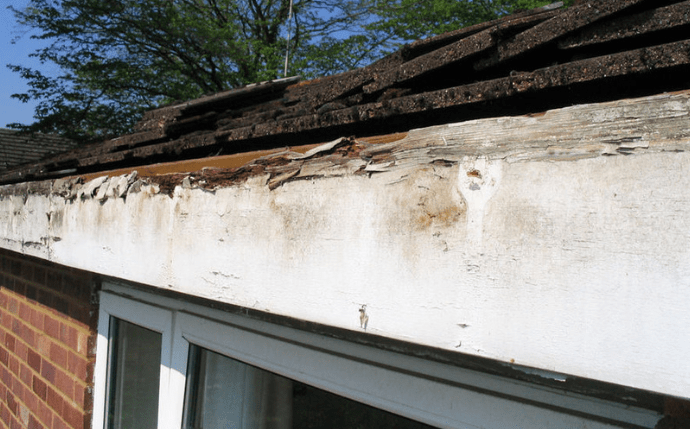
One of the most expensive aspects of neglected gutters is how often the damage extends into adjacent materials. Gutters are attached to fascia boards, and those boards are vulnerable when moisture stays trapped against them. Overflowing water can also wick into soffits, trim, and roof edges. On painted wood, you may see peeling or bubbling. On composite materials, you may see staining or swelling. On masonry, you may see mineral streaking or splash marks.
These are not just appearance issues. Once wood stays wet long enough, rot starts. Fasteners lose grip. Sections of gutter begin to sag. At that point, cleaning alone may not be enough because the system no longer holds its proper pitch or secure attachment. What could have been a straightforward maintenance visit turns into carpentry and gutter repair.
This tends to happen gradually. A homeowner notices a drip over the front walk but puts it off because the gutter itself is still hanging. A season later, one corner sags. By the time someone gets a ladder up, the debris is compacted, the spikes or hangers are stressed, and the board behind the gutter is soft. The visible gutter issue was only part of the story.
Landscaping suffers too
People often spend real money on landscaping and then let a clogged gutter undermine it. Overflow from a single section can carve trenches into mulch beds, flatten low plants, and wash soil away from root systems. During a hard rain, the water coming off a blocked gutter can hit with surprising force. It is not a gentle trickle. It is concentrated runoff from part of the roof, dropping at the wrong point.
That kind of repeated discharge can also create muddy splashback on lower siding and exterior doors. If the downspout discharge area is already weak, the damage compounds. What started as a gutter cleaning issue soon shows up as erosion control, regrading, mulch replacement, or damaged plantings.
In yards where drainage is already less than ideal, routine cleaning makes an even bigger difference. It keeps the water where it was intended to go rather than adding stress to problem spots.
Winter raises the stakes
Homeowners often think of gutter cleaning as a fall chore, and fall is certainly important, but the reason has less to do with tradition and more to do with what happens next. Debris left in gutters before winter acts like a dam. It slows drainage, holds water, and creates the conditions for freeze-related trouble.
Once water is trapped and temperatures drop, the added weight can be severe. Gutters are built to manage flowing water, not heavy blocks of ice mixed with wet leaf sludge. Even if the gutter does not detach, that weight can tweak the pitch enough to affect future drainage. Small distortions matter. Gutters do not need to collapse to stop performing well.
There is also the issue of roof edge behavior. Ice at the gutter line can contribute to backup along the eaves, particularly when daytime melting refreezes overnight. Roof insulation and attic ventilation play a role too, so it is not honest to blame every winter ice issue on dirty gutters. Still, clogged gutters definitely increase the risk and make existing vulnerabilities worse.
For homeowners in Hackettstown, getting gutters cleaned before winter is one of those practical steps that reduces the odds of a bad surprise in January.
Pests like neglected gutters more than you would expect
A clogged gutter full of wet organic debris is close to a ready-made habitat. Mosquitoes need standing water. Insects nest in undisturbed debris. Birds pull material from gutters or build directly in protected corners. Rodents sometimes use overgrown rooflines and clogged drainage areas as part of their travel route.
Most homeowners do not think of pest control when they think of gutter maintenance, but the link is real. Water, cover, and organic matter attract activity. Once that https://andypudh376.clearminster.com/posts/essential-benefits-of-hiring-experts-for-gutter-cleaning-in-hackettstown activity starts around the roofline, it can spread to soffits, attic vents, and other vulnerable entry points.
Clearing the system removes one of the more inviting conditions around the exterior of the house. It is not a substitute for broader pest prevention, but it closes off an unnecessary opportunity.
Routine service costs less than deferred repairs
There is a reason experienced property owners stay ahead of this work. Regular cleaning is rarely the most expensive line item in home maintenance. Deferred gutter maintenance, on the other hand, often creates several bills at once. One clogged system can lead to repairs in multiple areas: gutter rehanging, fascia replacement, exterior painting, landscape correction, and interior moisture remediation if things get far enough.
The economics are not complicated. Preventive service is usually predictable. Repair work after damage is not. Once water has affected wood, insulation, drywall, or foundation conditions, costs rise fast and troubleshooting takes longer.
This matters for homeowners planning to sell as well. Overflow stains, loose gutters, and visible drainage problems do not go unnoticed during showings or inspections. Even if the issue seems small, buyers tend to read exterior water problems as a sign that maintenance may have been deferred elsewhere too.
How often should gutters be cleaned in Hackettstown?
There is no honest one-size-fits-all answer, because homes vary too much. Tree cover, roof design, gutter size, local wind exposure, and the condition of nearby trees all affect the schedule. A house surrounded by mature trees may need attention more often than a house on a relatively open lot. A steep roof can move debris differently than a lower-slope roof. Some systems also have more valleys, corners, and trouble spots where buildup starts first.
For many Hackettstown homes, twice a year is a reasonable baseline, often once in late spring and once in late fall. But that is only a starting point. Some properties need more frequent checks, especially after major storms or during years with unusually heavy leaf drop. Others can manage with less frequent service if tree cover is minimal and the system drains well.
A simple rule of thumb is that if you regularly see any of the following, the schedule is probably too loose:
- Water spilling over the gutter edge during rain
- Plants or weeds growing from gutter debris
- Sagging sections or separated joints
- Staining on siding beneath the roofline
- Pools of water near the foundation after storms
Those signs mean the system is already underperforming. Ideally, cleaning happens before those symptoms appear.
Why DIY is not always the money-saving move
Some homeowners are comfortable working from ladders and handling basic exterior maintenance. There is nothing wrong with that if the setup is safe, the home is accessible, and the person doing the work understands what to look for beyond leaves. But gutter cleaning is one of those jobs that seems simpler from the ground than it is in practice.
The obvious risk is falls. Uneven ground, wet rungs, awkward reach, and second-story height change the equation quickly. There is also the issue of incomplete cleaning. Pulling debris out of the trough is only part of the task. Downspouts need to be checked. Pitch issues need to be noticed. Loose hangers, seam leaks, separated elbows, and damaged end caps need an informed eye. If those details are missed, the homeowner may think the gutters are cleaned when the drainage problem is still there.
Professional service is not just about labor. It is also about inspection. An experienced crew usually spots early warning signs that save money later. They can tell the difference between a system that is dirty and one that is beginning to fail.
Gutter guards help, but they are not a free pass
There is a persistent myth that once gutter guards are installed, cleaning is over forever. In the field, that is rarely true. Guards can reduce the amount of large debris that enters the gutter, and on some homes they are a useful part of the solution. But they still need to be inspected, and many systems still collect fine debris, granules, seeds, and sludge over time.
Some guards perform well under certain leaf types and poorly under others. Some shed debris nicely in light conditions but struggle after storms. Others make maintenance less frequent but more particular because debris collects on top or around the edges. The value depends on the house, the tree mix, and the quality of the product and installation.
That means homeowners should treat guards as a tool, not an exemption from maintenance. They may reduce how often full cleaning is needed, but they do not eliminate the need for regular oversight.
What a good gutter service actually looks for
A proper visit does more than scoop out leaves. The crew should be paying attention to drainage performance and the condition of the system as a whole. That includes debris removal, downspout flow, visible leaks, fastening points, alignment, and signs of overflow damage on nearby surfaces.
A solid service call often includes attention to these areas:
- Clearing all accessible debris from gutters and downspouts
- Testing that water moves through the system properly
- Noting loose brackets, leaks, and sagging sections
- Checking discharge points away from the foundation
- Identifying signs of rot, staining, or overflow patterns
That kind of inspection is where much of the value lies. It turns a routine maintenance task into an early warning system for larger problems.
Small maintenance decisions shape long-term ownership costs
Homeownership is full of tasks that compete for attention. Some feel urgent because they are visible. Others are easy to postpone because the consequences arrive slowly. Gutter cleaning falls into the second category, which is exactly why it is so often neglected. Yet from a building-performance standpoint, it punches above its weight.
Clean gutters protect more than the gutters themselves. They protect trim, siding, foundations, basements, walkways, and landscape beds. They reduce the chance that winter weather will exploit trapped water at the roofline. They remove one more source of pest attraction. They help preserve curb appeal and support a stronger inspection story if the home goes on the market.
For property owners looking at Gutter Cleaning Hackettstown services, the real value is not just a cleaner roof edge. It is risk reduction. It is preserving the parts of the house that cost far more to repair. And in a place where seasonal debris and winter weather can stress a drainage system quickly, routine attention is not overcautious. It is simply smart maintenance.
A homeowner rarely regrets cleaning gutters on time. They do regret ignoring them after the first overflow, the first sagging corner, or the first sign of water where it does not belong. That is the moment when routine care stops being a minor chore and starts looking like one of the most practical investments you can make in the house.
Just Gutters LLC
Address: 262 Main St, Hackettstown, NJ 07840
Phone number: +12013319454
FAQ About Gutter Cleaning Hackettstown
How much should a gutter clean cost?
Professional gutter cleaning typically costs between $163 and $333, with a national average of around $210 to $250 for a standard-sized home.
What months should you clean gutters?
You should clean your gutters twice a year—once in late autumn (November to December) and once in late spring (April to May).
Is it worth paying for gutter cleaning?
Yes, paying for gutter cleaning is worth it because it prevents thousands of dollars in water damage, roof leaks, and structural repairs.